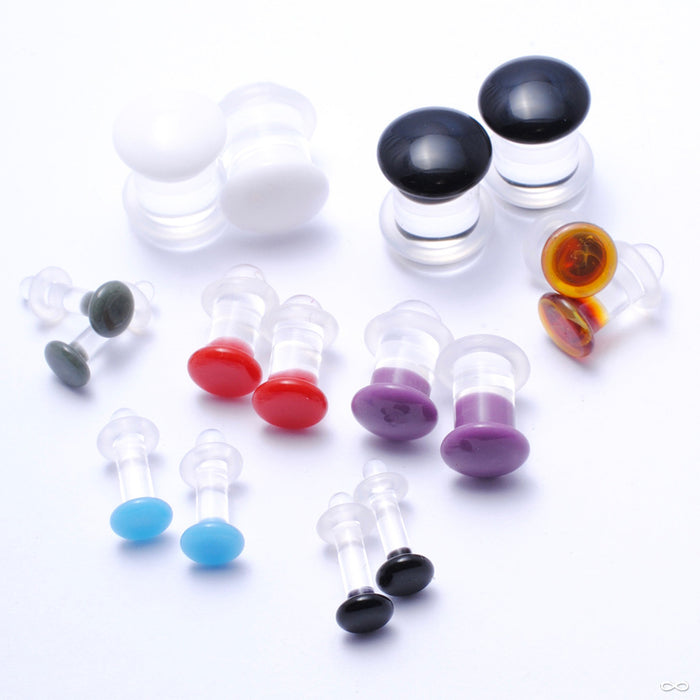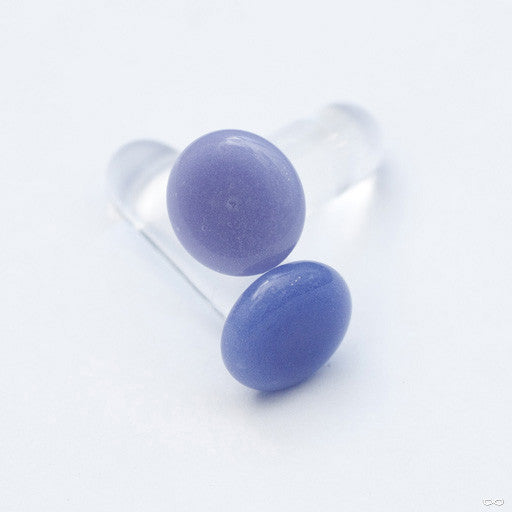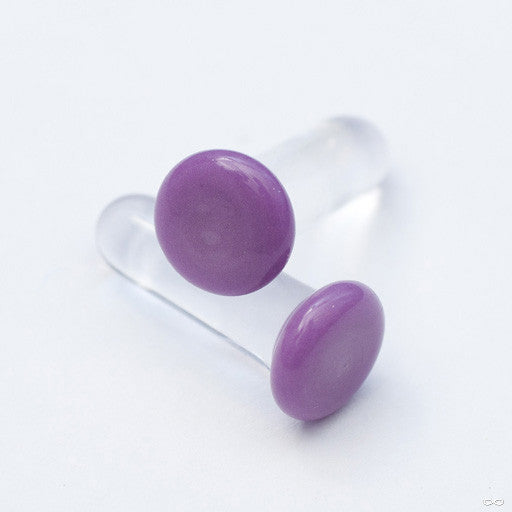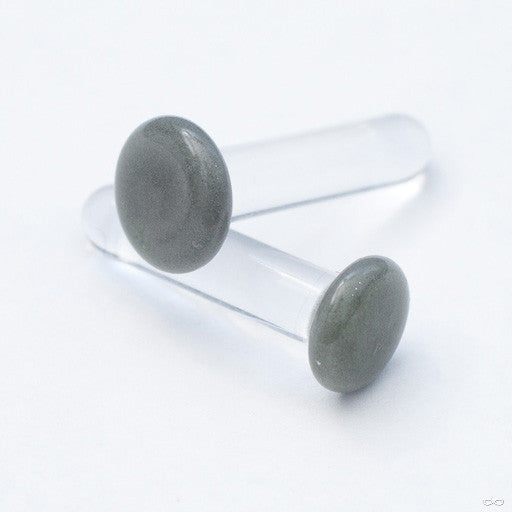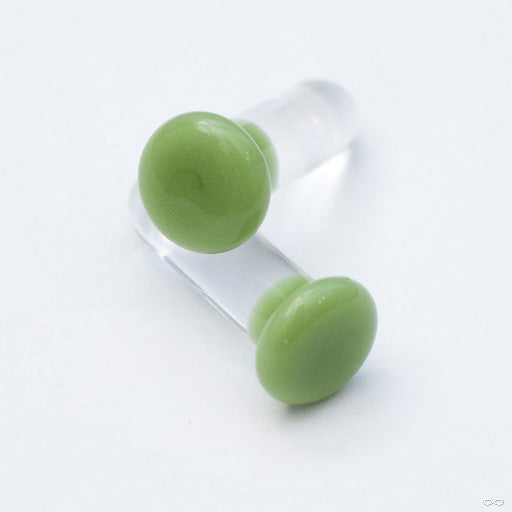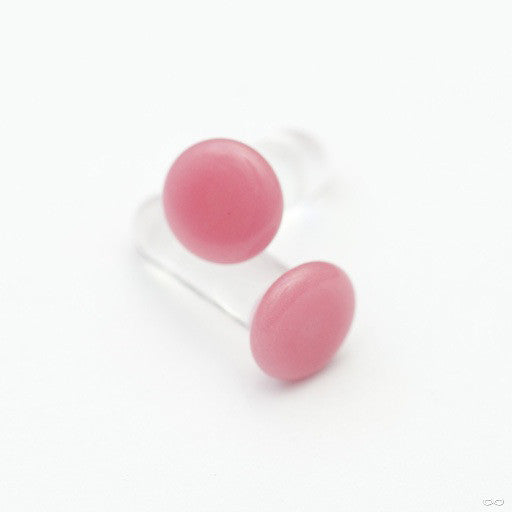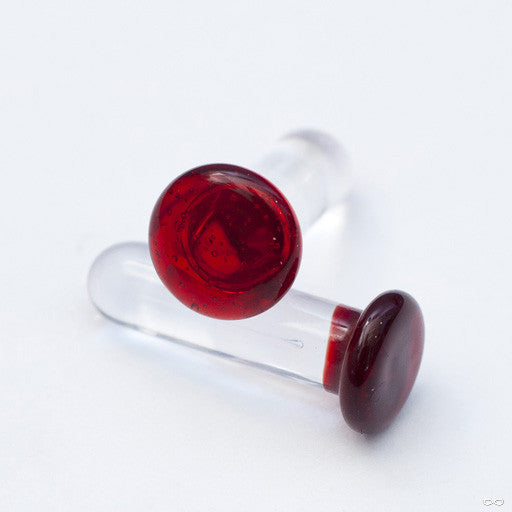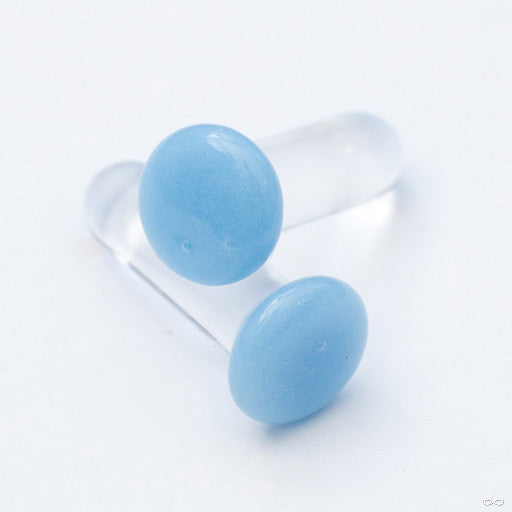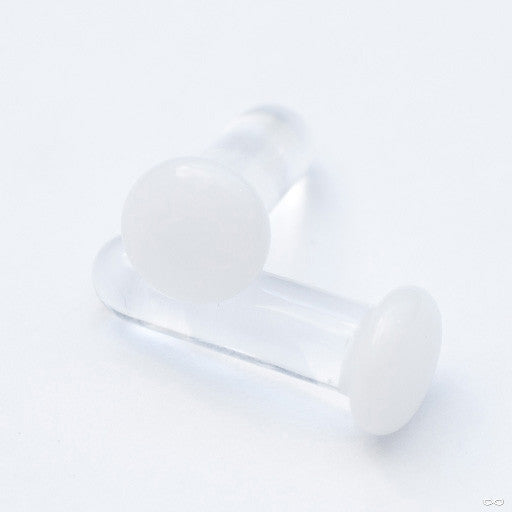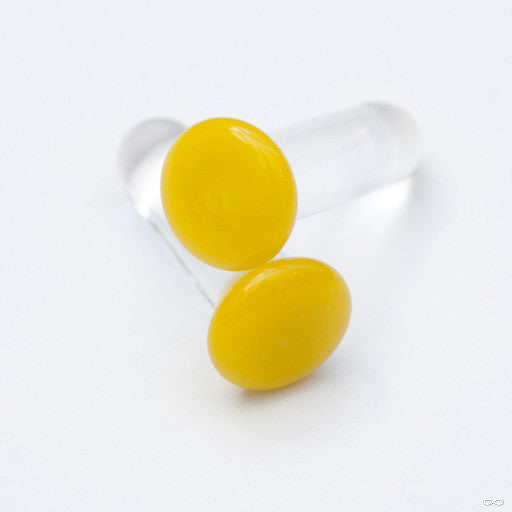


There are many different methods of stretching, but they all work toward the same result: increasing the size of your hole. The key to stretching is time. The slower you stretch, the easier and more comfortable it will be, and the further you will be able to go.
There is no single right way to stretch a piercing, but there are definitely many wrong ways. Stretching a piercing requires a long-lasting conversation with your body. You need to be able to recognize and respect your limits and the limits of your body.
The most important thing to remember about stretching is this: be patient. When you stretch the size of your piercing you’re actually encouraging your body to produce more cells, and therefore more skin, around your piercing. This is a gradual process, and the slower you go, the healthier your piercing will be and the bigger you can ultimately get it. Going too fast can not only damage your tissue, but can limit your ability to stretch later because of scarring or thinned skin. Whatever method you choose to use, take your time!
Inserting larger jewelry
For many piercings, you won’t need any special equipment to graduate to the next size; you can simply insert thicker jewelry. This method is obviously easier with “stretchier” skin, like earlobes, inner labia, or scrotum piercings, but will work with other piercings as well. One way to get an idea if you are ready for the next size is to pull your jewelry downwards. Can you see light through the hole above the jewelry? You may be able to just pop the next size in; just keep in mind this jewelry should be non-porous and non-reactive, such as implant-grade titanium, steel, glass, or some varieties of stone.
Keep in mind this method may not work as well for piercings through more “rigid” (or less-stretchy) tissue, such as ear cartilage, nipple, or navel piercings. When stretching earlobes, there is a school of thought that says this method is the only way they should be stretched, that if you can’t slip in the next size jewelry comfortably, you’re simply not ready to stretch. While this is not always the case, it’s definitely not a bad rule to follow.
Tapering
A taper is a tool, about the same length as a piercing needle, that gradually increases in thickness over a few inches, from a thinner end at one size to a thicker end of the next larger size. Newer jewelry is pressed against the larger end, so that as the taper is passed through the piercing, the jewelry follows, making for a more gradual (and therefore easier) transition to the larger size—more so than simply working in the blunt end of larger jewelry. This is especially useful with harder-to-stretch piercings like nostril, nipple, and navel piercings.
It’s important to note that a taper is a tool and not a piece of jewelry. While “ear tapers” or “ear crescents” were once a popular jewelry style, it’s easy to hurt yourself by using these to stretch too quickly, especially if your jewelry is made from porous material like horn or bone, or reactive plastics like acrylic.
Lastly, while the tapering method can be useful when starting to stretch earlobe piercings, at larger sizes, tapers are no longer recommended. In these cases, if larger jewelry cannot be easily inserted without a taper, the stretch may be too big or too soon.
Wearing multiple pieces of jewelry
While not effective in all piercings, putting multiple pieces of jewelry in one piercing is sometimes an option, especially in ears and inner labia. (This is just one reason to keep all your older, smaller jewelry; you can still use it to stretch.) If you do stretch by wearing multiple pieces of jewelry, be sure to adjust the locations of all the pieces frequently so you don’t get sore spots or pinching.
Taping
Since stretches can get more difficult as you go larger, you might find that eventually you can no longer just jump from one size straight to the next. One method to prevent over-stressing your holes is to use tape to make your plugs bigger by much smaller increments. (While jewelry is measured by diameter, what your body is feeling is circumference—and there is an incrementally greater difference between one size and the next.) Simply wrap one layer (or more) of tape around the jewelry and re-insert it into the piercing. You will repeat this method over time, gradually adding more tape and thus increasing the size of the hole.
But not just any tape will do. What you are using to wrap should be inert and free of adhesives. The best option is plumber’s tape. (That's right, the tape used to wrap pipe threads and seal plumbing joints.) Plumber’s tape, commonly referred to as PTFE or Teflon®, is an extremely thin, non-toxic film which only sticks to itself and is inert in contact with the body. Bondage or vet tape has been effectively used by some, but as this is PVC, it is more reactive and is not suggested for prolonged contact with skin.
Taping is not a suggested method for enlarging all piercings, but tends to be effective on earlobes and some septum piercings.
Weights
Adding weight to a piercing in order to gradually stretch it is a common technique in many cultures. While it’s not practical for all piercings, most piercings can be weighted to some extent. However, there are a few things to remember: you should only wear weights in a completely healed piercing—one that is years old, not months. (If the skin inside the hole isn’t the exact same color and texture as the skin outside, it’s probably too fragile.) With earlobes, you might need to work up from wearing weights, wearing them for only a couple of hours at a time, to avoid soreness or even headaches. But if you experience any thinning of the skin the weight rests on, you should stop wearing them and switch to lighter jewelry.
Starting out larger
If you know for sure that you want to go really big, there are methods to start your initial piercing with larger gauge jewelry. Stop by and talk to a piercer to hear about your options.
Have us do it!
Stretching a piercing is like healing one: it involves a dialogue with your body and a journey of discovery. We’re more than happy to help you on that journey.
Check out our stretching tips for more information about stretching, including various tips and tricks to make the process easier.