Why can’t I get my navel pierced?
If I can’t pierce the top, can I pierce the bottom?
Can you pierce my outie?
Why do navels take so long to heal?
Why is the jewelry so thick?
Can I go swimming?
What about sit-ups and exercise?
What about tanning?
Do I have to take it out if I get pregnant? Can I get it repierced after the baby?


Product title
Sold out
Original price
$29.99
Original price
-
Original price
Original price
$29.99
Current price
$19.99
-
Current price
$19.99


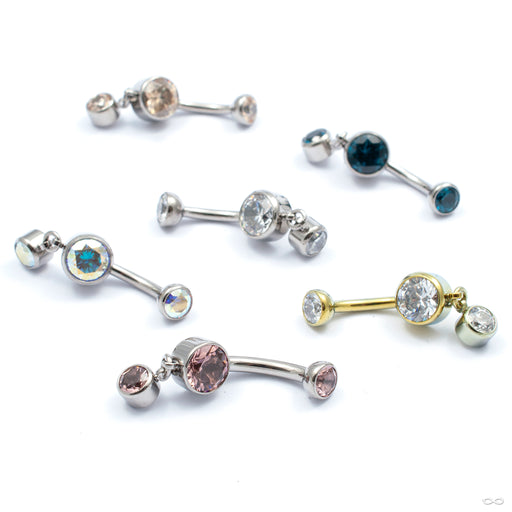
Gem Curved Bars
-
 Original price $0.00 - Original price $85.00Original price $0.00$85.00$85.00 - $85.00Current price $85.00
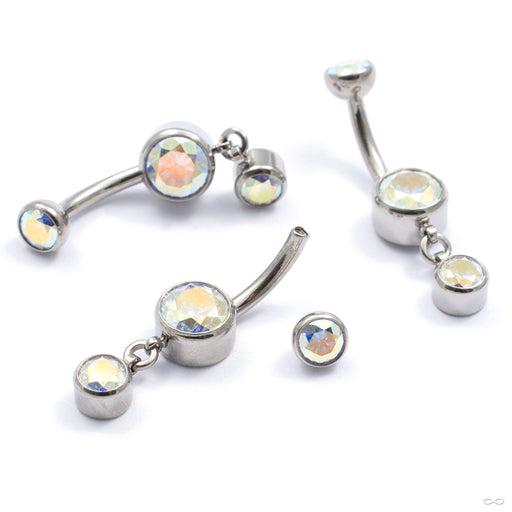
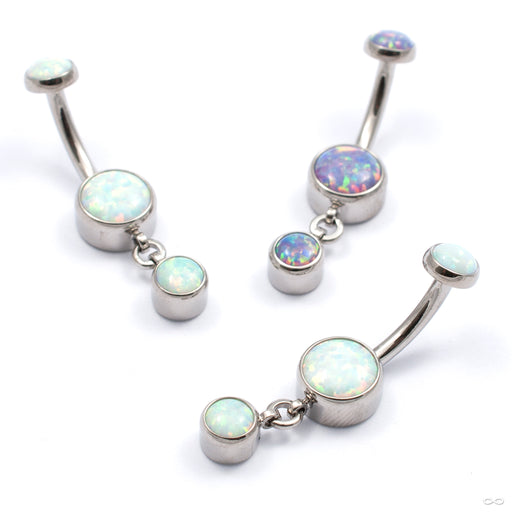
Bezel-set Faceted Gem Threaded Navel Curve with Dangle in Titanium from Industrial Strength
Industrial StrengthAn internally threaded gemmed curved barbell with Swarovski crystals held in smooth bezel-settings. The top 4mm stone is removable, and the bottom ...
View full detailsOriginal price $0.00 - Original price $85.00Original price $0.00$85.00$85.00 - $85.00Current price $85.00 -
 Original price $0.00 - Original price $85.00Original price $0.00$85.00$85.00 - $85.00Current price $85.00
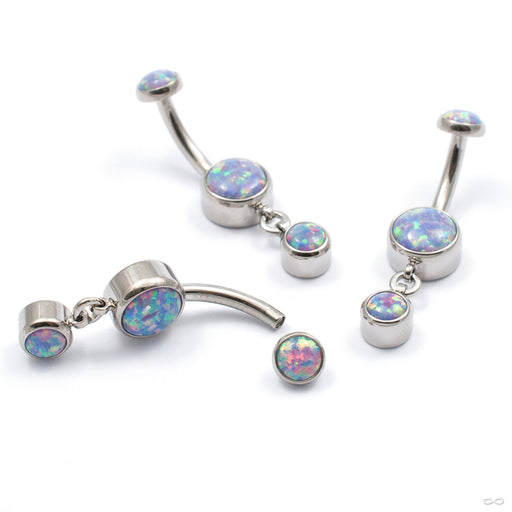
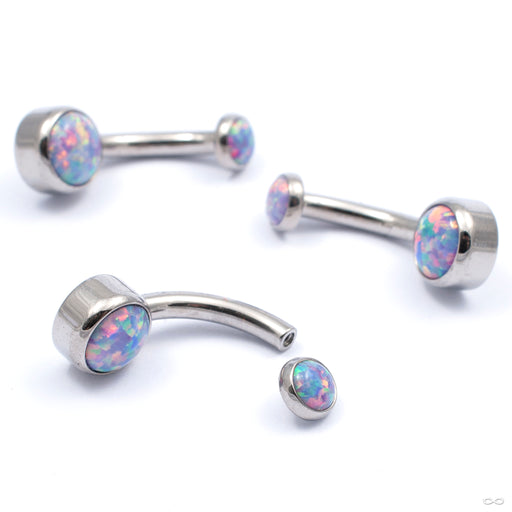
Bezel-set Faux-Pal Gem Threaded Navel Curve with Dangle in Titanium from Industrial Strength
Industrial StrengthSmooth bezel settings hold matching synthetic opal cabochon stones on this internally threaded curved barbell. The top 4mm stone is removable, and ...
View full detailsOriginal price $0.00 - Original price $85.00Original price $0.00$85.00$85.00 - $85.00Current price $85.00 -
 Original price $75.00 - Original price $75.00Original price$75.00$75.00 - $75.00Current price $75.00
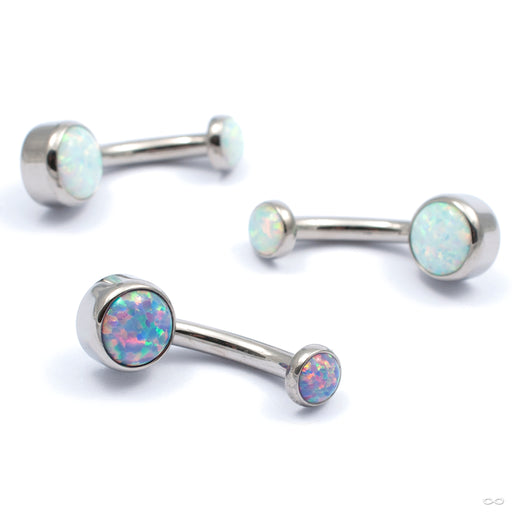
Bezel-set Faux-Pal Gem Threaded Navel Curve in Titanium from Industrial Strength
Industrial StrengthSynthetic opal cabochons are held in a smooth bezel setting and sit at either end of this internally threaded curved barbell. The top 4mm stone is ...
View full detailsOriginal price $75.00 - Original price $75.00Original price$75.00$75.00 - $75.00Current price $75.00 -
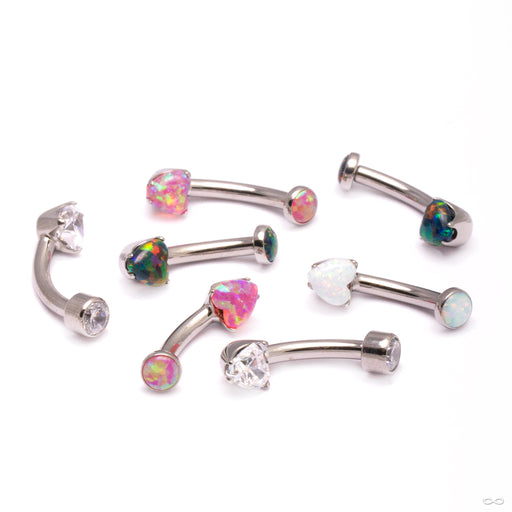 Original price $0.00 - Original price $78.00Original price $0.00$78.00$78.00 - $78.00Current price $78.00
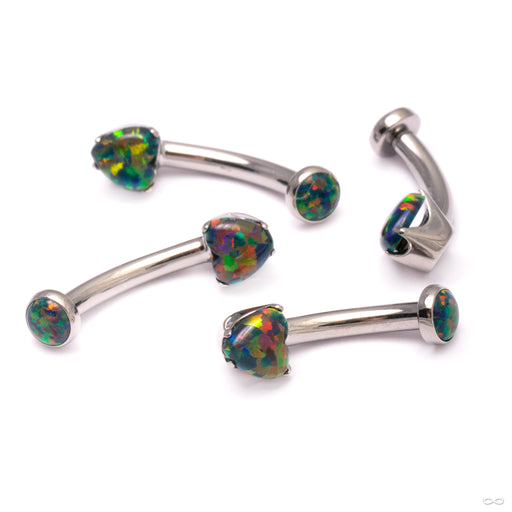
Heart Curved Barbell in Titanium from Anatometal
AnatometalA heart-cut stone is prong-set in titanium and fixed to the end of a curved barbell with a matching 4mm removable internally threaded top. Length ...
View full detailsOriginal price $0.00 - Original price $78.00Original price $0.00$78.00$78.00 - $78.00Current price $78.00 -
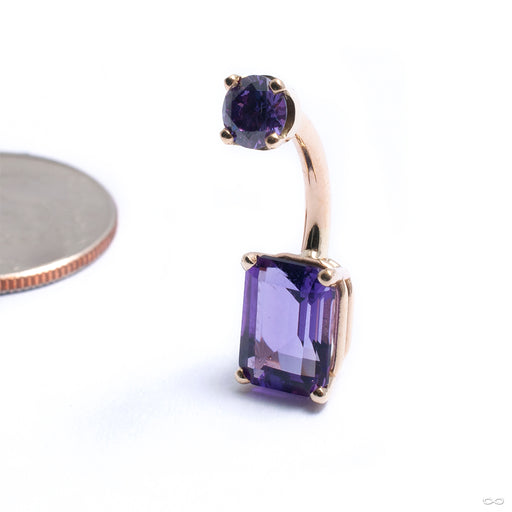
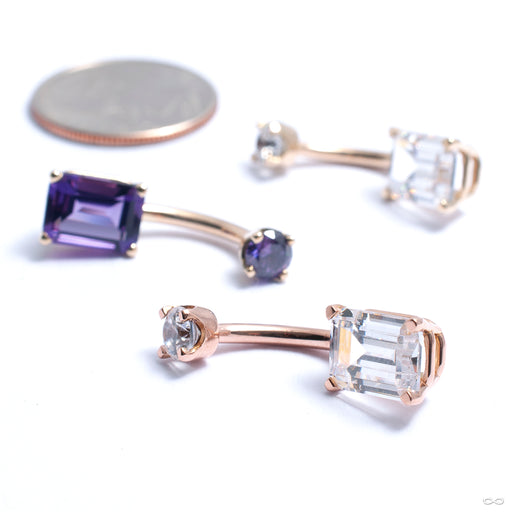 Original price $278.00 - Original price $278.00Original price$278.00$278.00 - $278.00Current price $278.00
Prong-set Emerald-cut Threaded Navel Curve in Gold from LeRoi
LeRoiAn emerald-cut stone in a basket setting is fixed to a solid gold curved barbell with a matching prong-set stone on top. The bottom 6mm by 8mm gem ...
View full detailsOriginal price $278.00 - Original price $278.00Original price$278.00$278.00 - $278.00Current price $278.00 -
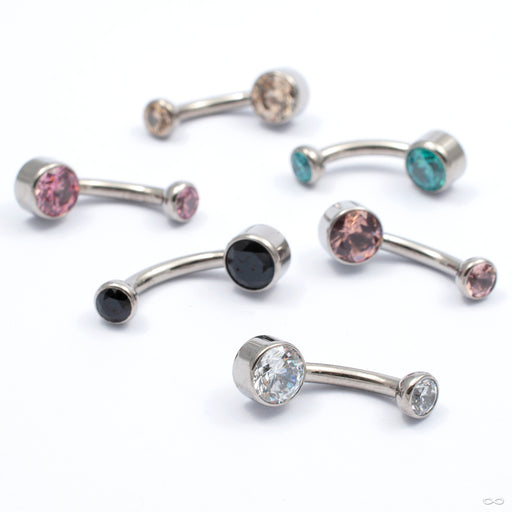
 Original price $0.00 - Original price $75.00Original price $0.00$68.00 - $75.00$68.00 - $75.00Current price $68.00
Bezel-set Gem Curved Barbell from Industrial Strength
Industrial StrengthBrilliant Swarovski crystals are bezel-set on each end of these gemmed curved barbells. Top gem is a 3/16” removable internally threaded ball, and ...
View full detailsOriginal price $0.00 - Original price $75.00Original price $0.00$68.00 - $75.00$68.00 - $75.00Current price $68.00 -
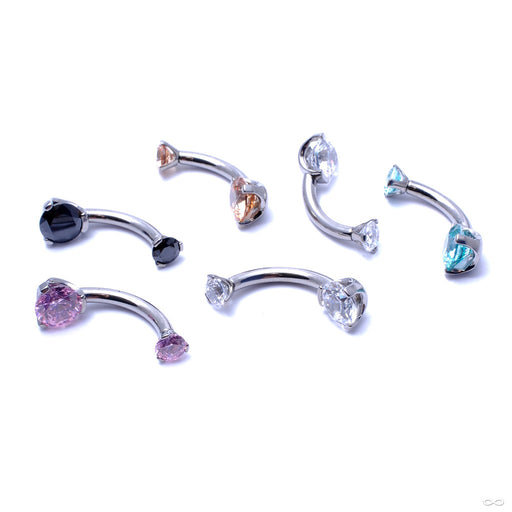
 Original price $85.00 - Original price $85.00Original price$85.00$85.00 - $85.00Current price $85.00
Three Prong Gem Curved Barbell from Industrial Strength
Industrial StrengthMade from implant-grade titanium, these gem curves have brilliant, prong-set Swarovski crystals on each end. The bottom 6mm gem is fixed, while the...
View full detailsOriginal price $85.00 - Original price $85.00Original price$85.00$85.00 - $85.00Current price $85.00 -

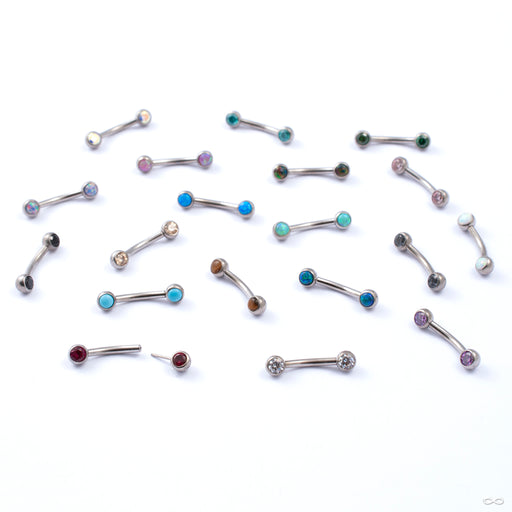 Original price $0.00 - Original price $40.00Original price $0.00$40.00$40.00 - $40.00Current price $40.00
Curved Press-fit Post with Side-set Stones in Titanium from Neometal
NeoMetalNeometal’s threadless, press-fit posts are machined from implant-grade titanium (ASTM F136 6Al-4V ELI) and polished to a mirror finish. Swarovski C...
View full detailsOriginal price $0.00 - Original price $40.00Original price $0.00$40.00$40.00 - $40.00Current price $40.00















